
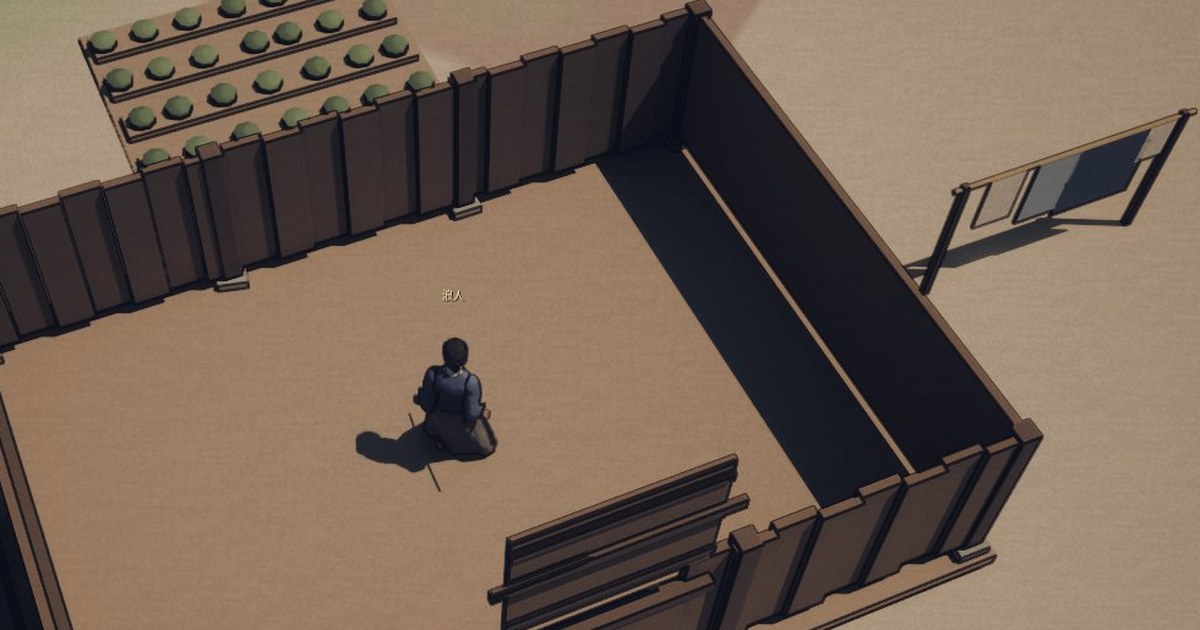
People live in Ransebiyori’s villages. In the morning they leave home for the fields, and at sunset they come back. You stay at inns, shop at stores, visit people you know. Houses hold that daily life.
But when I played it, the houses didn’t add up.
Shut, yet you could walk through
The 21 houses in the village and 88 in the towns were built with their doors shut. But the shut doors had no collision, so the hero could walk straight through and inside. Villagers also lived in, and came and went from, houses with shut doors.
They looked like houses you couldn’t enter, but played like houses you could. The two disagreed.
There was another problem: some houses didn’t show their insides even when you went in. Ransebiyori looks down from above, so when someone enters a house, its roof is hidden to show the inside. But roofs were matched to houses by “the nearest house”, and 114 of the 144 roofs ended up matched to no house at all. Walk into the oil shop in Kutsukake and the person vanished under the roof, with only their name tag floating above it.
Opening the doors, and naming the roofs
I fixed two things:
- Every house people live in or trade from is now enterable: 119 of the 145 buildings. Their doorways got curtains and eaves, and a stepping stone.
- Every roof now says, by name, which house it belongs to. Without the nearest-house search, the roof disappears for any enterable house.
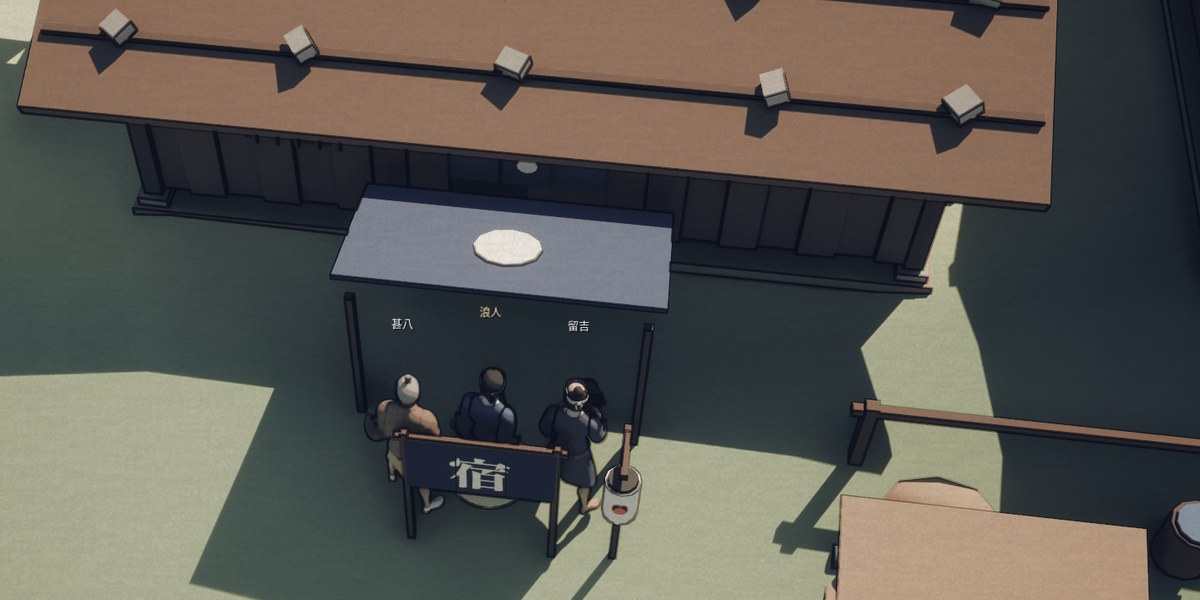
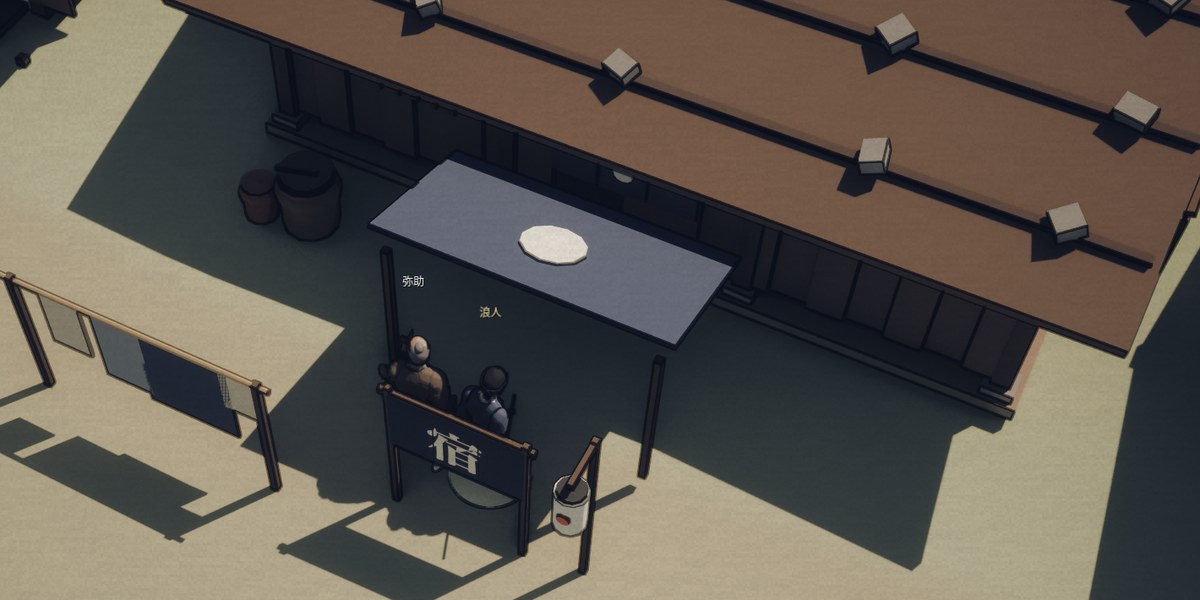
Only five houses in the village of Okehazama keep their shut doors. There’s no reason to go inside, so their doors now have collision and you can’t walk through.
Inside
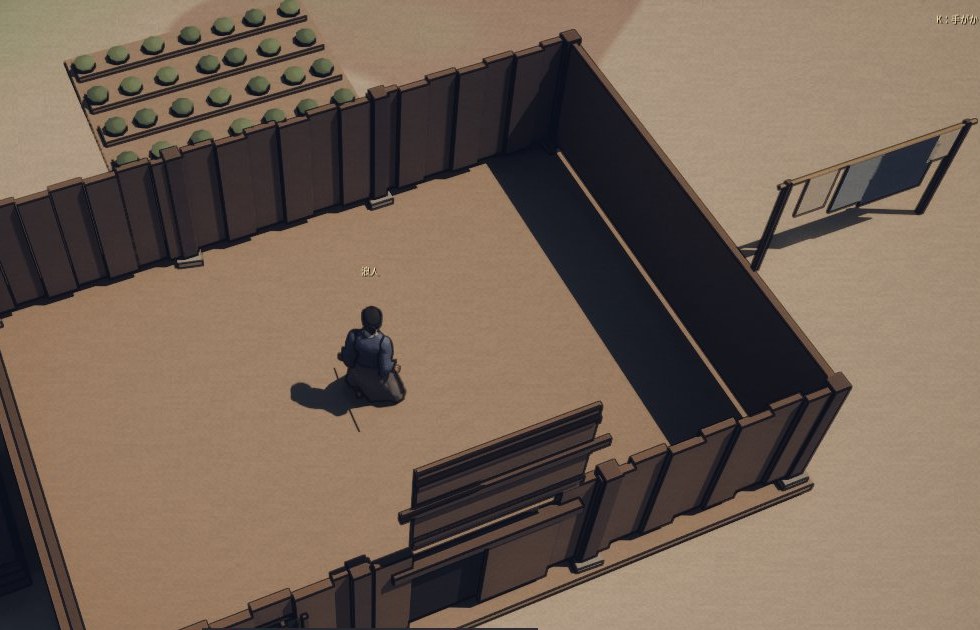
Step through the doorway and the roof disappears so you can see in. Beyond the wall, the ridges of a field and a drying pole.
What’s still left
As you can see, the insides are still bare. Few hearths, beds or tools; they don’t yet look like homes people live in.
The village from outside is a little flat by day, too. Next, I’ll look again at the colours of roofs, walls and ground, and work on the village by day.