
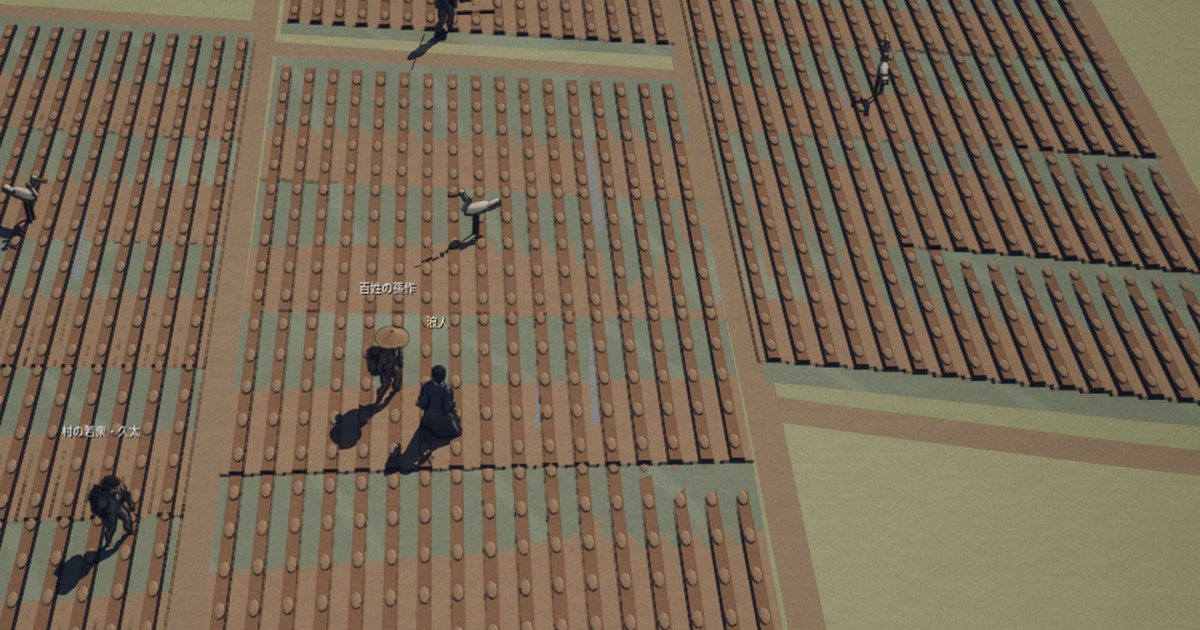
In Ransebiyori’s villages, people live out their days. They get up in the morning, work by day and go home at night. That “work by day” had been a little vague.
Places weren’t decided person by person
Before, the screen side placed who worked where, one person at a time. A set person to a set spot. Out of sight, they simply arrived when the time came. So people moved inconsistently: someone heading for the fields would stop halfway, or suddenly appear in the field.
A place for the day, by marks on the map
Now each villager has a “place for the day” marked on the map.
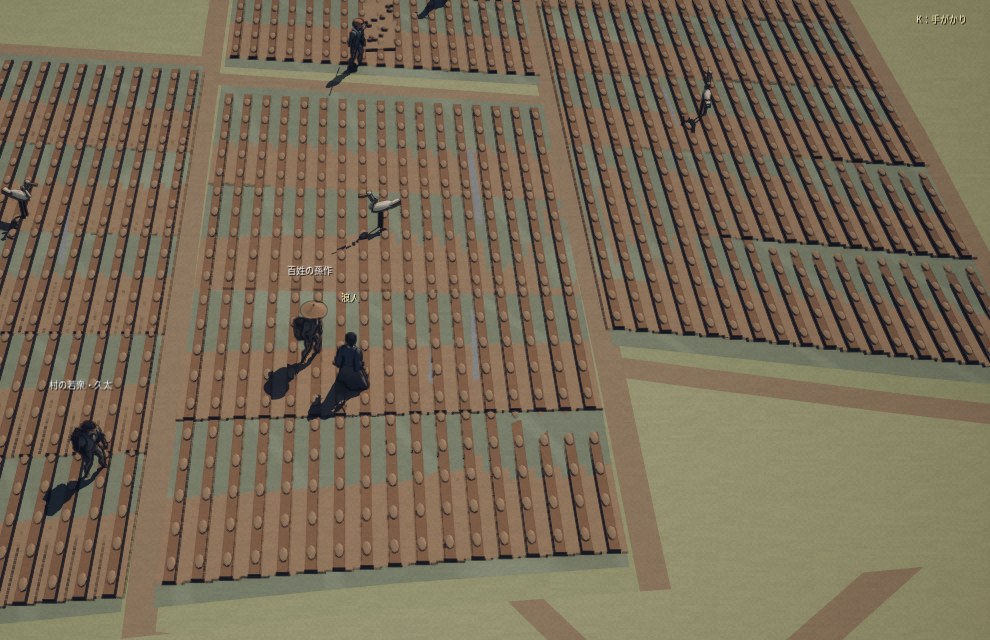
- Farmers go to the season’s fields (different plots at planting time and after).
- Porters and fishermen go to their work in town.
- The household stays by the hearth.
- Lookouts go to their posts on mountain paths and in camps.
- People who might join you wait at a meeting spot.
In the morning, each walks to their place on their own feet. People out of sight walk by the same rules.
Travellers passing through town sometimes stop at a teahouse bench or a shopfront. After a short rest, they walk on. Travellers who check into an inn don’t come back out onto the road that day.
Staying home on days of heavy rain
Weather now affects daily life too. On days of heavy rain, people who work outdoors stay home. No one in the fields or on the shore. People who work inside shops and inns carry on as usual.
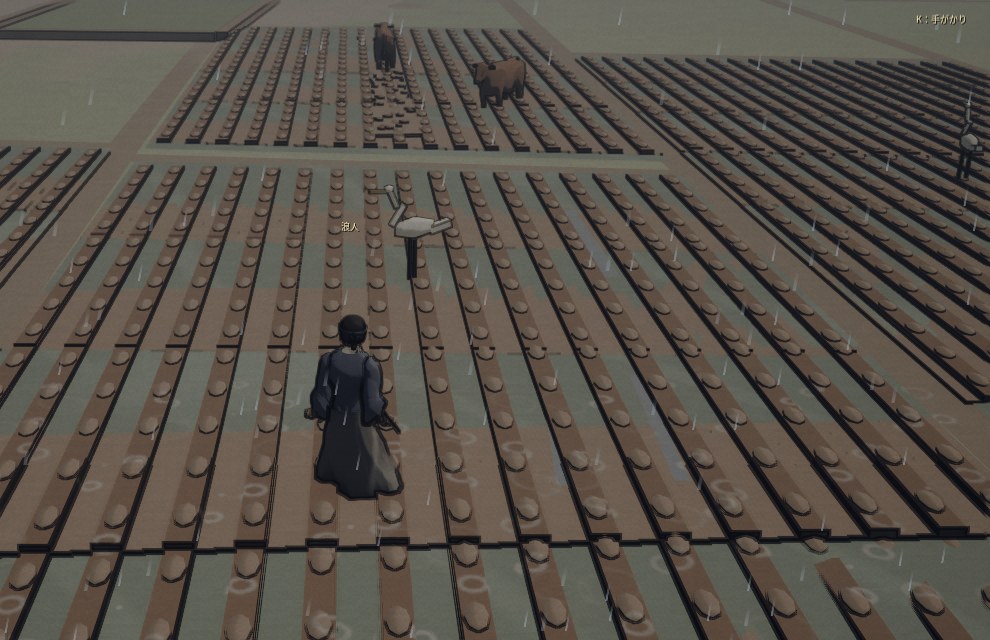
Go to the same fields on a clear day and people are working again.
What’s still left
The insides of houses are still bare. People now sit by the hearth, but there are few hearths and tools, and the feel of daily life is thin. I’ve started putting rice bales and firewood stacks under the eaves, so I hope to show that area next.