
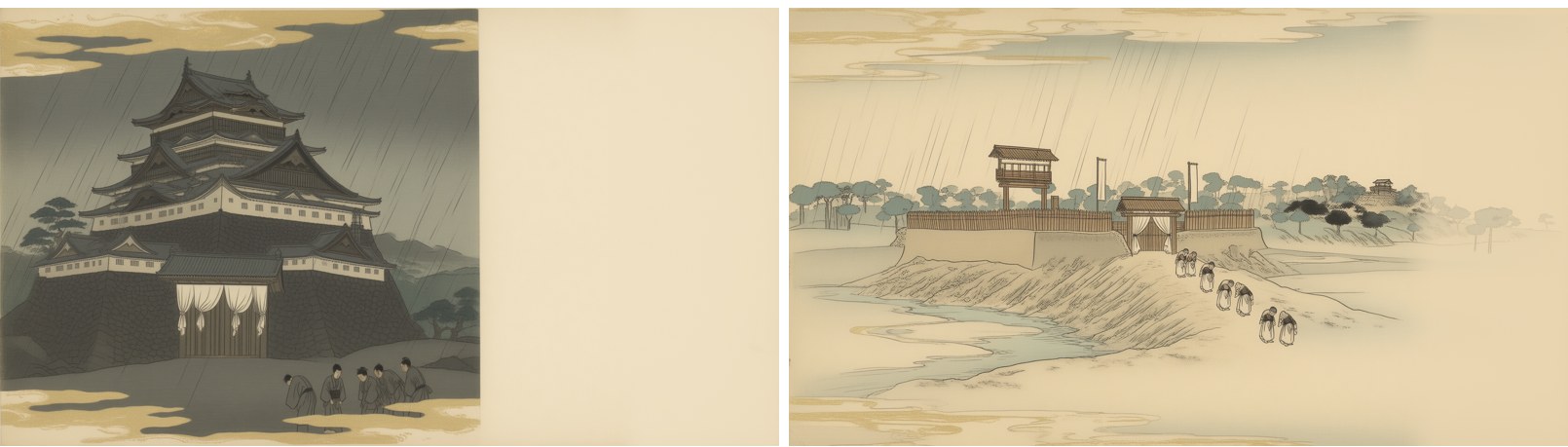
Ranse Biyori is a game about walking through Owari province in 1560, the year of the battle of Okehazama. Between chapters, the game shows picture scrolls: what is happening in the far provinces while you walk.
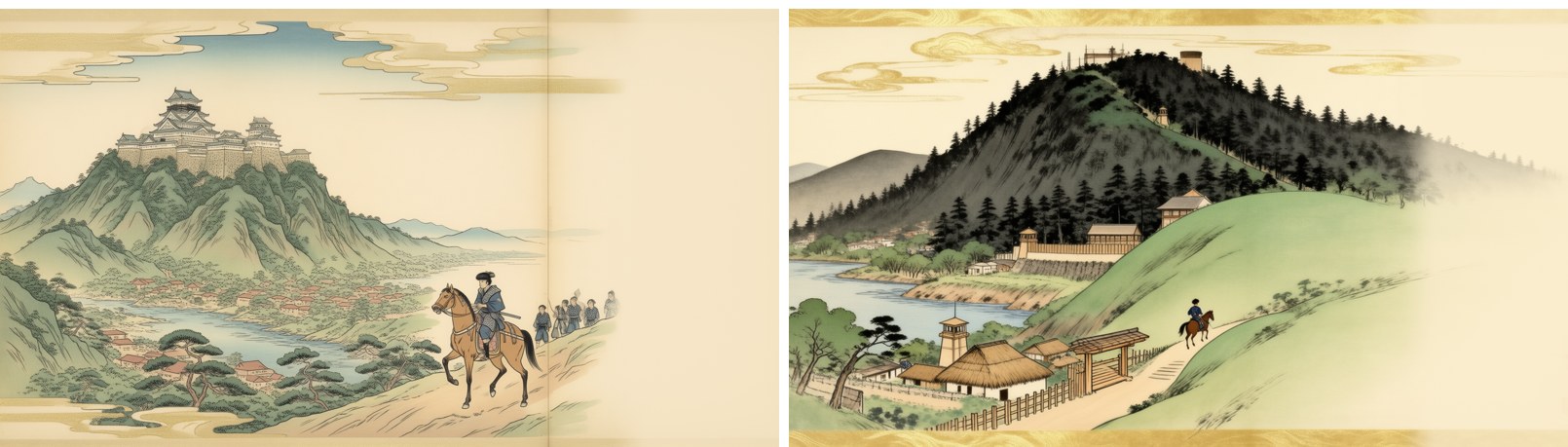
An AI image model painted those scrolls, running locally (Qwen-Image-Edit in ComfyUI). It started from screenshots of the game and repainted them in the style of old Japanese picture scrolls. When I lined them up, something felt wrong. Almost every castle looked like Himeji.
The castles did not exist yet
The tall stone keep, the white walls, the layered roofs. That is the picture most of us have of a “Japanese castle”. But it comes later.
- Tall keeps spread from the late 1570s. Azuchi Castle (built 1576–1579) is usually named as the first big one.
- Himeji’s keep, the most photographed of all, was finished in 1609.
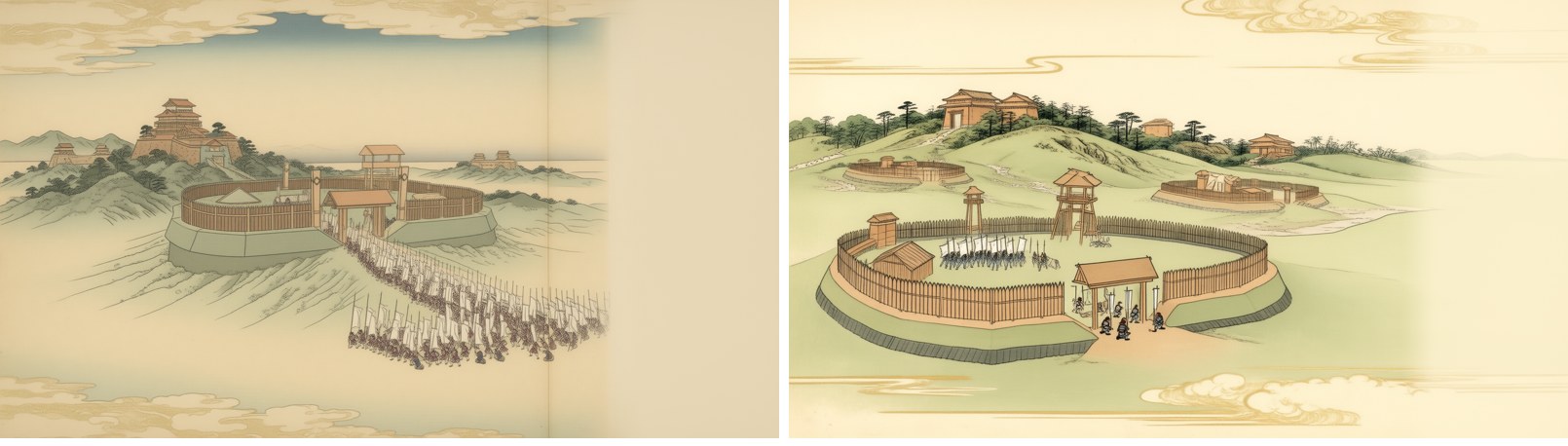
In 1560, a castle was mostly earth and wood. Earthen ramparts, dry moats, wooden palisades, a gate tower, a lookout, and the lord’s hall inside. Mountain castles were hills cut into flat terraces, not stone towers.
So the scrolls showed castles from fifty years in the future. Twelve of the far-province pictures were made, and seven had a keep that should not be there.
Why the AI did it
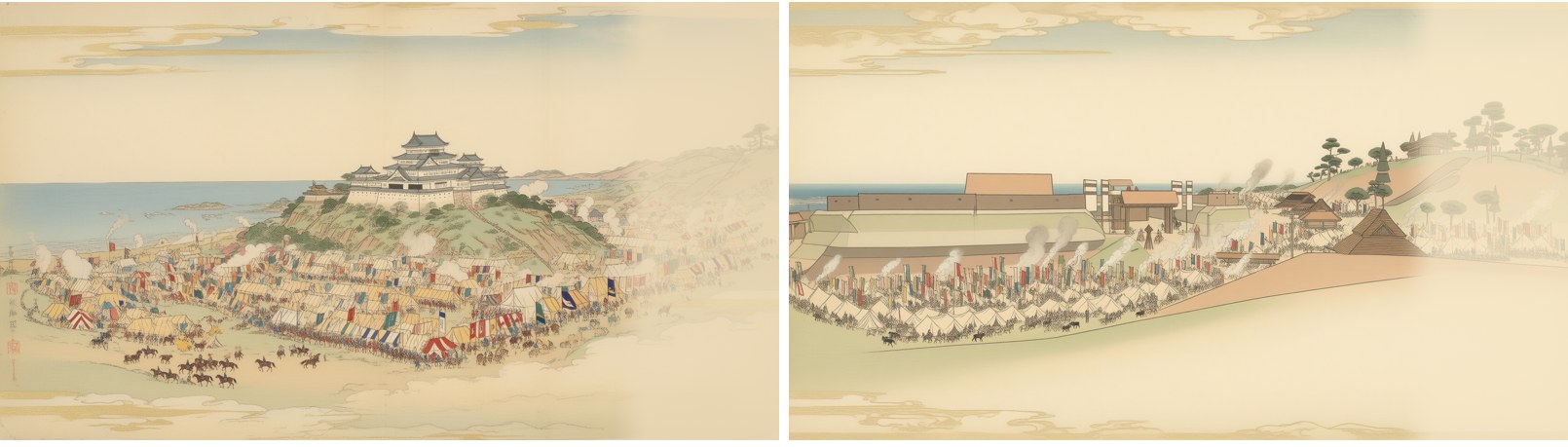
Even when the screenshot had only a small fort in it, the model filled in what it expected a Japanese castle to look like: the most common picture of one. Photos, tourist posters, games and films all show Himeji, Osaka and Matsumoto. Earthwork forts from 1560 are barely in any picture at all, because almost none of them survive.
The AI was not wrong about castles. It was right about the photos.
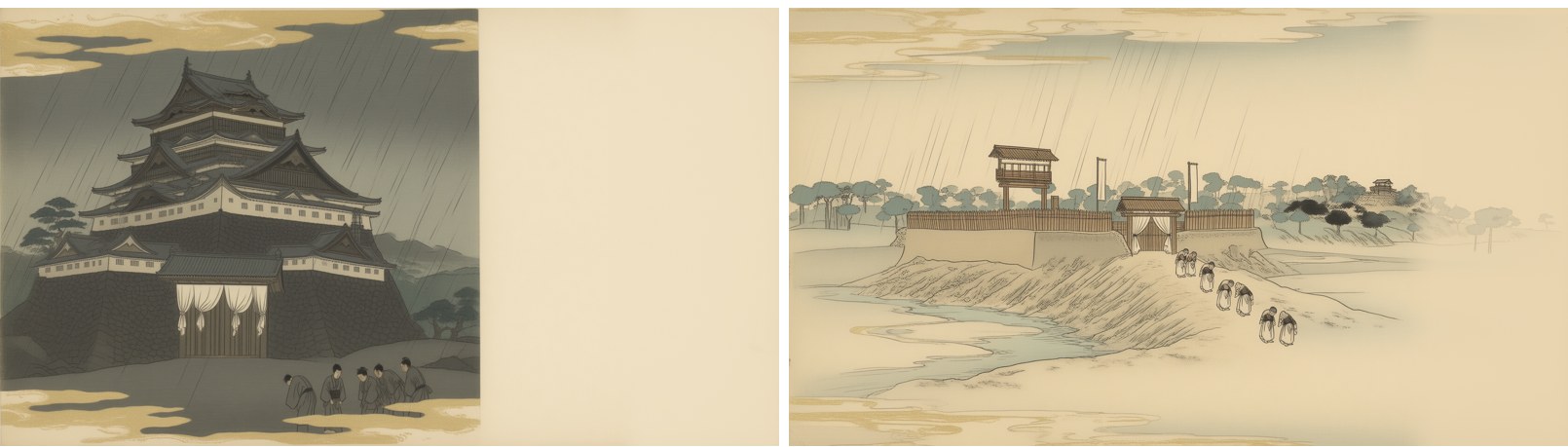
The rain scene was the worst one. A black keep the size of a mountain, with tiny people bowing at the gate.
What fixed it
Saying “no keep” was not enough on its own. What worked was to name the things that a 1560 castle actually had:
- earthen ramparts and dry moats
- a wooden palisade and board fences
- a gate tower and a lookout
- the lord’s hall inside
- and, said once: no keep
I also had to push it away from things that crept in from Chinese palace art: curved temple roofs, multi-storey pavilions, red lacquer, strange rocks. Then I made four versions of each picture and picked the one with nothing from the wrong century.
When the prompt describes the thing instead of the label, the model has something to paint. The label “castle” pulls it to the famous picture. The parts pull it to the real one.
The lesson for AI art in historical games
If your setting is earlier than the famous pictures of it, the AI will give you the famous pictures. Check every image for things that came later. And when you ask again, describe the parts, not the name.
The redrawn pictures still have small details that are off. I’m fixing them as I find them.
Where to see what a castle looked like around 1560
- Kobe City: the mountain castles of Kobe (Japanese): reconstruction drawings of Takiyama, Tanjōsan and Takahata castles. Earthen castles without stone walls: terraces, cut moats and earthen ramparts.
- Nagoya City: Ōdaka Castle ruins (Japanese): the castle where the young Tokugawa Ieyasu brought in supplies during the battle of Okehazama. It appears in Ranse Biyori. Photos of the site today and of the excavation.
Next time: the opening scrolls, redrawn from real screenshots of the game.