
Ransei Biyori is a Sengoku-era life sim where you walk Owari province in May 1560 as a lone ronin. The demo is being built around the few weeks on either side of the Battle of Okehazama on May 19.
This post is a snapshot, as of November 22, of how we are fitting the sources into the game. None of it is final. Playtests and more reading will keep changing it. To keep the fun of playing intact, I have tried not to say much about what actually happens in the game.
1. Three houses tie the knot
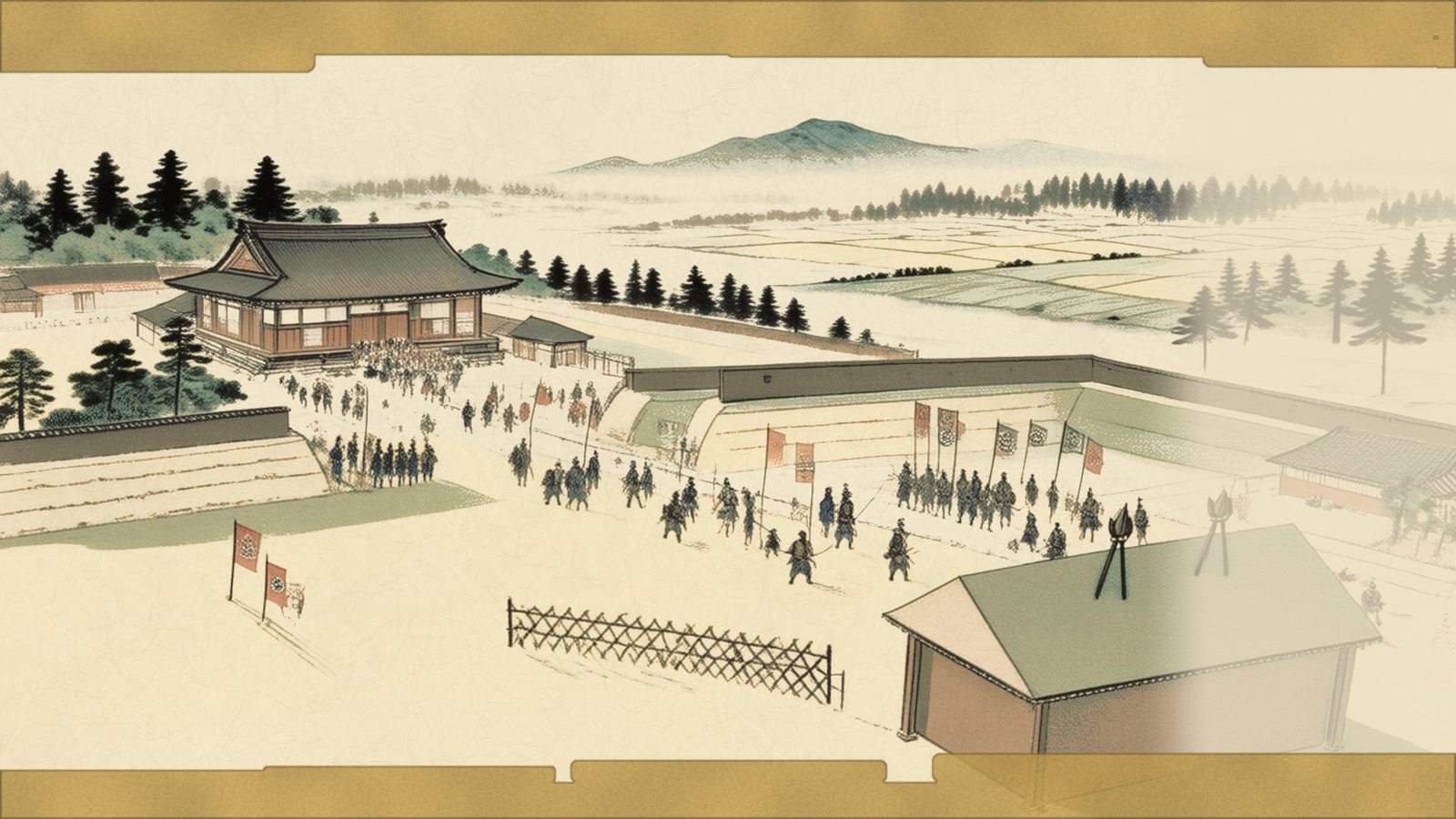
Between 1552 and 1554 the Imagawa, Takeda and Hōjō married their daughters into each other’s houses. The story that the three lords met at a temple to swear the pact (the “Zentokuji meeting”) is usually treated as a later invention.
You often read that the alliance secured Yoshimoto’s back, so he could march west into Owari. We could not find a source for that causal link. The order of events is not that simple either. The Yamaguchi father and son at Narumi had already gone over to the Imagawa before the third of those marriages. Why Yoshimoto came to Owari is also debated. The old idea that he was marching on Kyoto is now considered unlikely, and other views say he came to relieve Narumi and Ōdaka, or to secure eastern Owari.
The game’s scroll currently just says: “The Imagawa, Takeda and Hōjō bind themselves by giving each other daughters.” The scrolls list events and never say “and so.” I like that this lets the game avoid claiming a cause we cannot source.
2. Castles and forts in eastern Owari
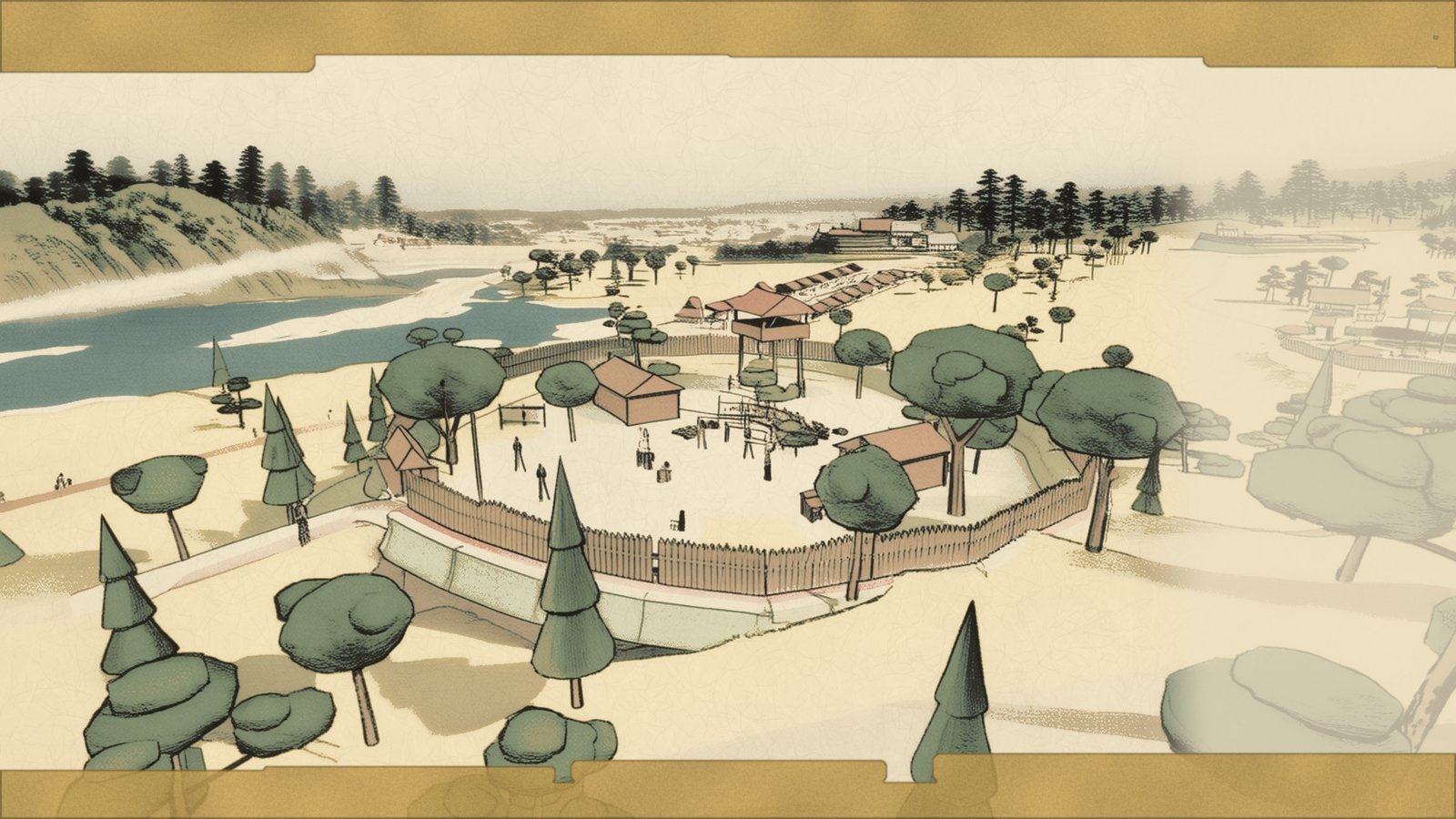
The Yamaguchi also brought the Ōdaka and Kutsukake castles over to the Imagawa. In answer, Nobunaga built the Tange, Zenshōji, Nakajima, Marune and Washizu forts and manned them (Shinchō Kōki, opening volume). The game’s map has these three castles and five forts too.
3. May 17 and 18
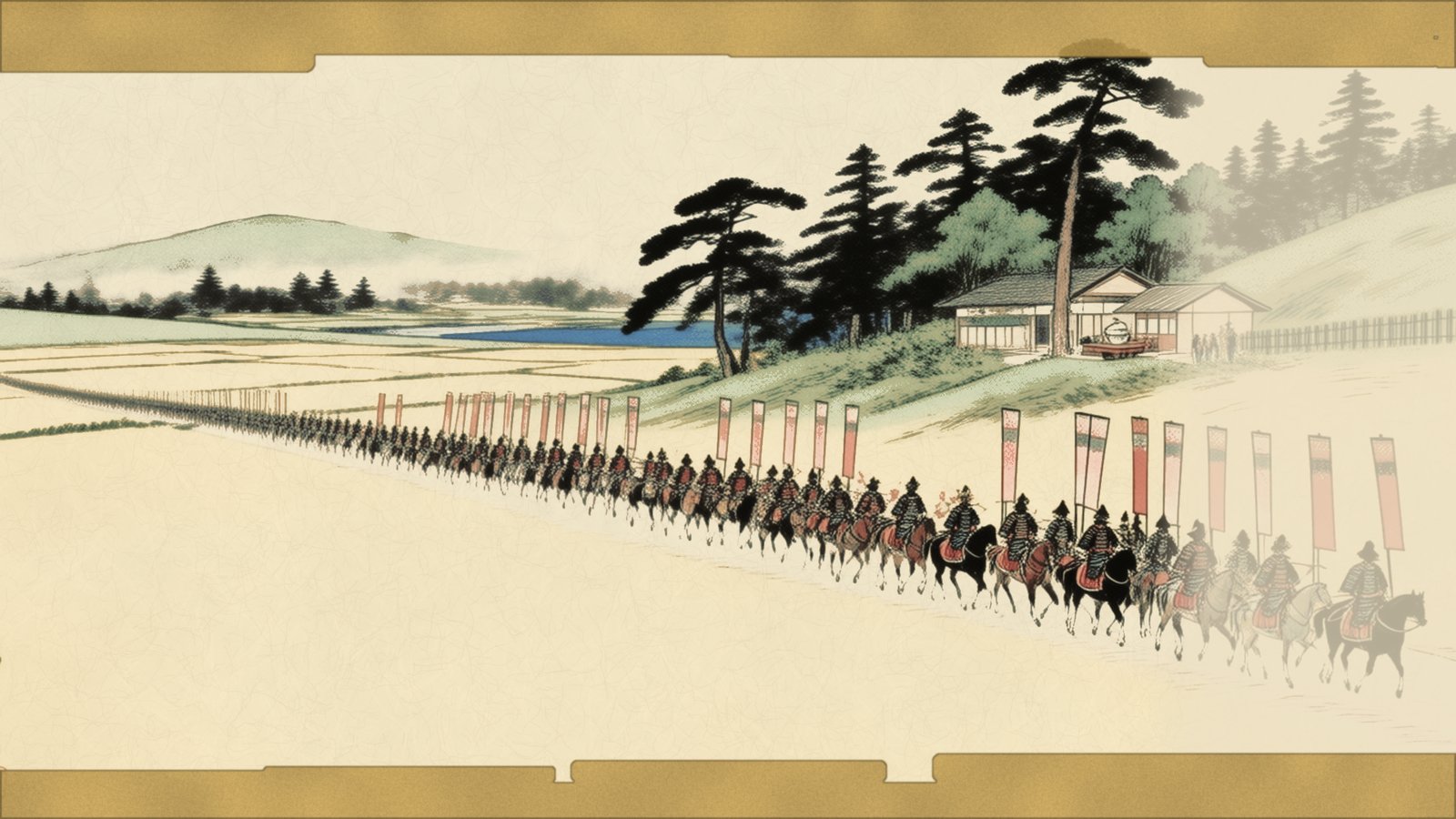
The Imagawa army is usually put at 25,000 (Owada Tetsuo). The Shinchō Kōki says 45,000.
The Shinchō Kōki records Yoshimoto camping at Kutsukake under the 17th. The 18th is also widely given, and the game currently uses the 18th.
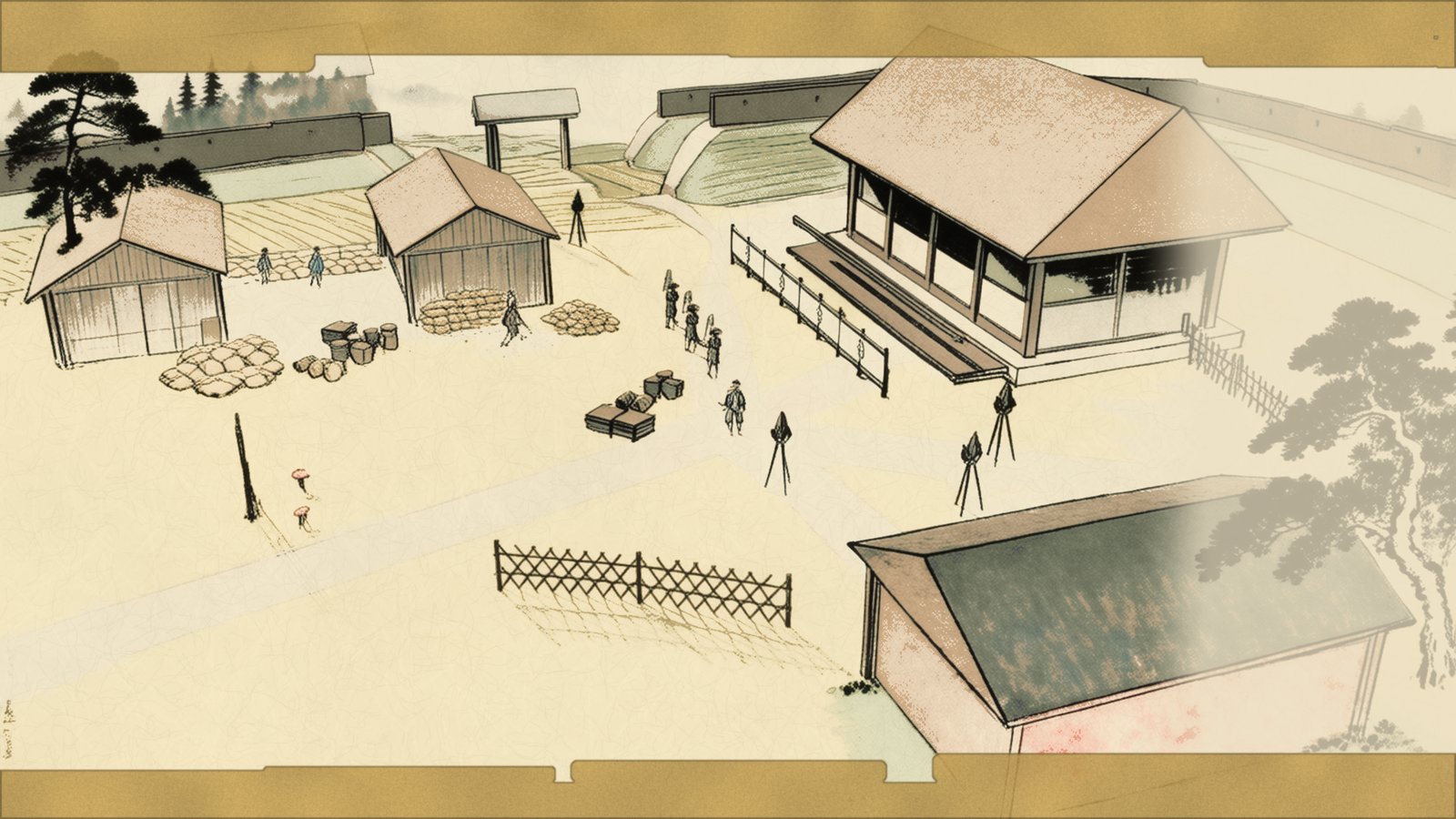
On the night of the 18th, provisions get into the besieged Ōdaka castle. The Shinchō Kōki names the man who brought them in as “Ieyasu” (Matsudaira Motoyasu at the time).
4. May 19
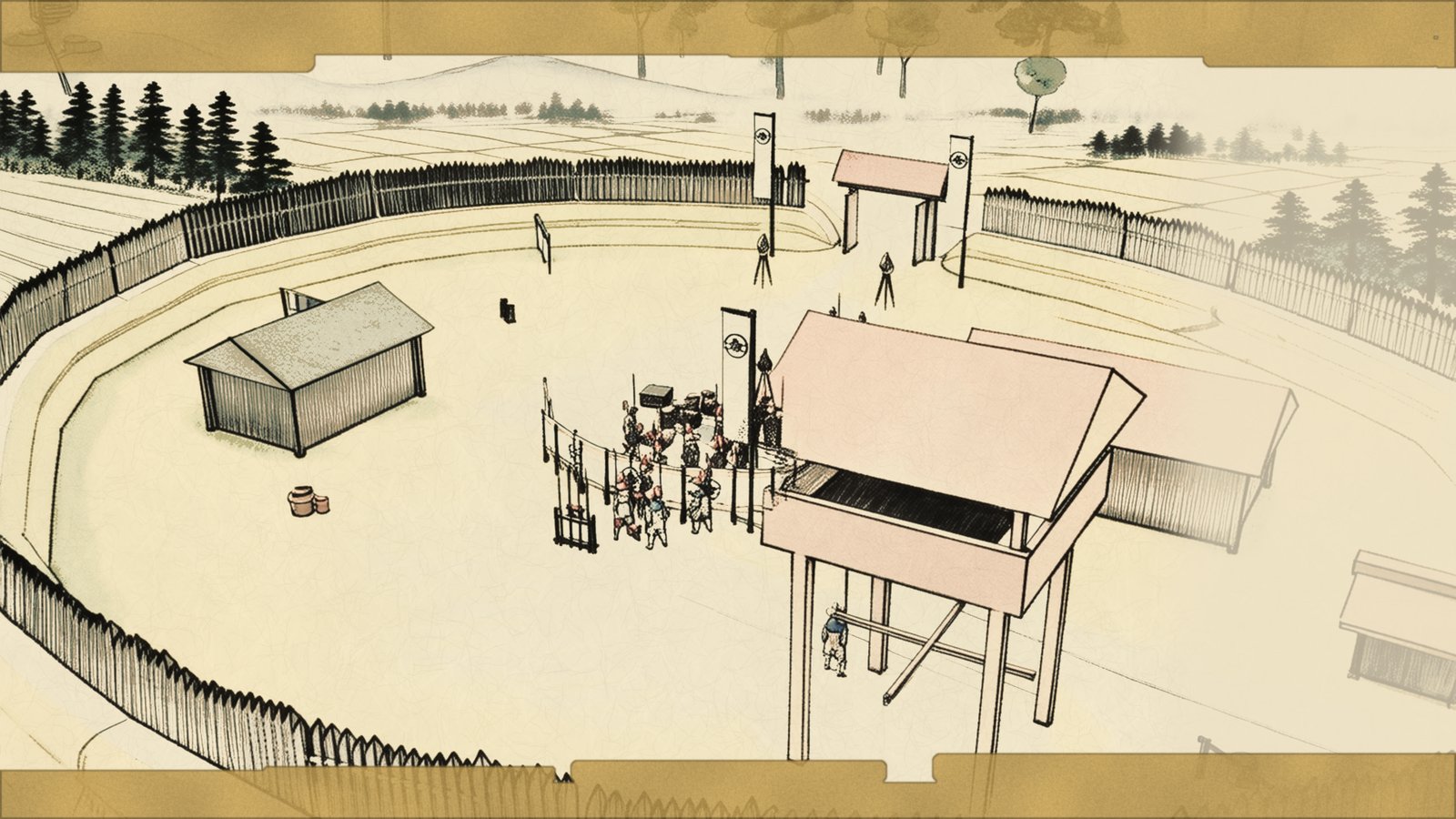
The flow of May 19 is built from the chapter “The Death of Imagawa Yoshimoto” in the opening volume of the Shinchō Kōki. Six riders leaving Kiyosu, Atsuta at the hour of the dragon, on through Tange, Zenshōji and Nakajima, the vanguard of Sassa Hayato-no-shō and Senshū Shirō, the Imagawa headquarters resting on “Okehazama-yama,” the sudden rain, the attack at the hour of the sheep. We keep the hours and names as close to that text as we can.
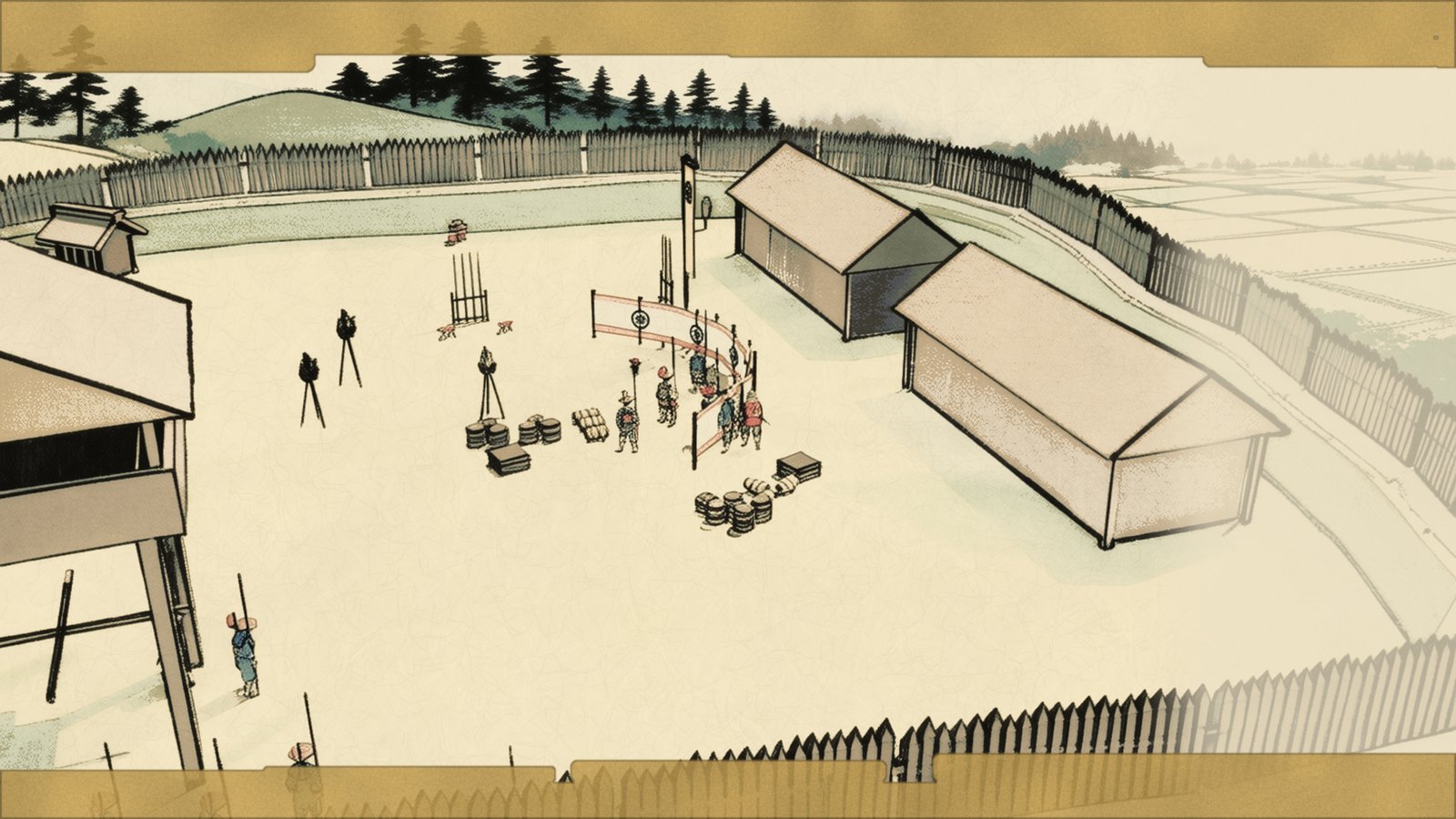
One thing stood out while researching. The Shinchō Kōki says nothing about a detour or a hidden approach. It says Nobunaga went along a single path between deep paddies, in full view of the enemy. The view that it was a frontal attack (Fujimoto Masayuki) rests on this passage.
The game’s Nobunaga takes something close to that frontal route. But one line in a scroll still used the old phrase “surprise attack.” I plan to fix it the next time we touch the scrolls.
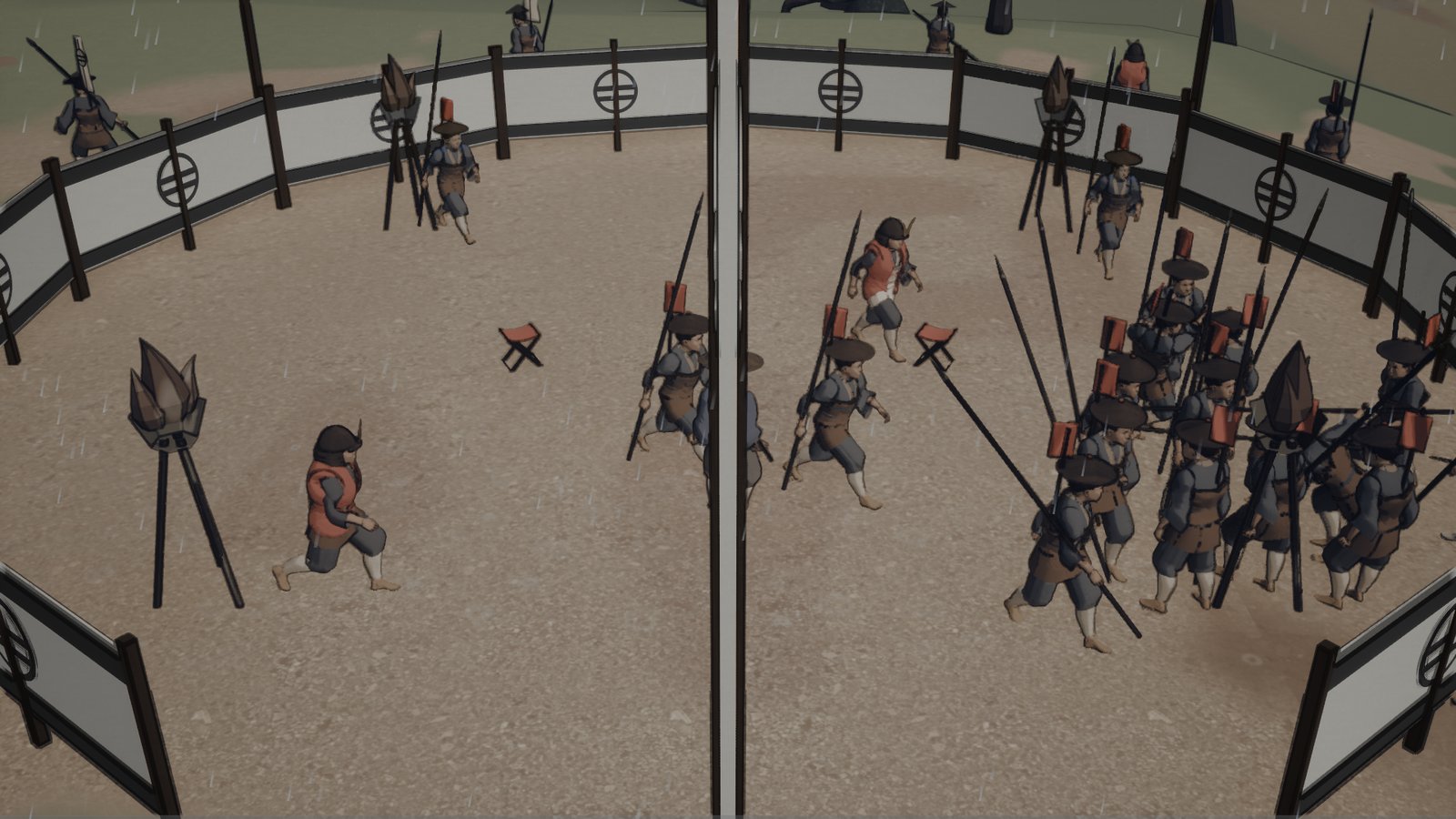
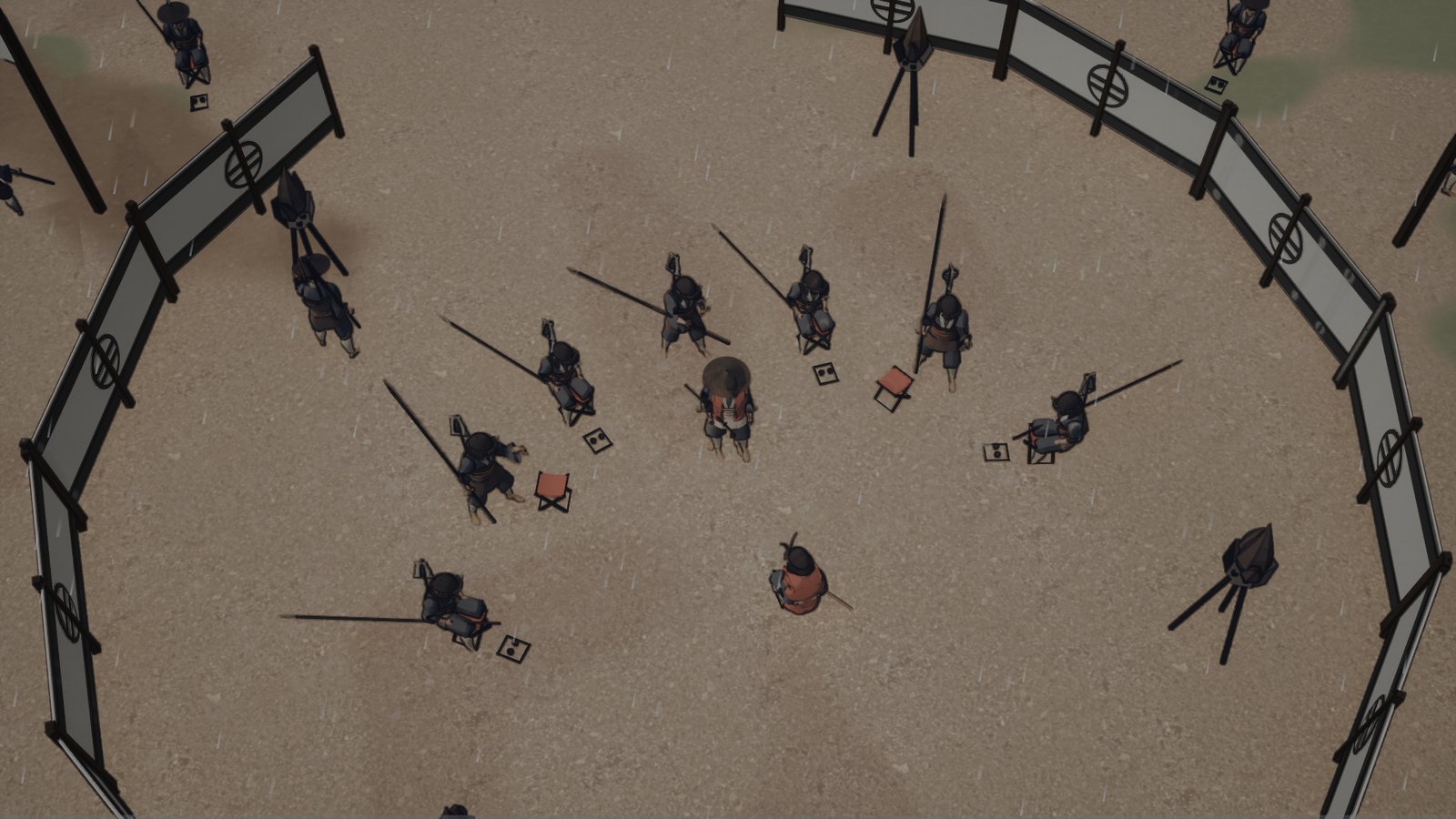
The crest on the camp curtains is the Imagawa “two bars in a circle.” We are in the middle of reworking how the rain looks.
What you see that day depends on where the hero is and what they do. I would rather leave that for you to find out by playing.
5. Afterwards
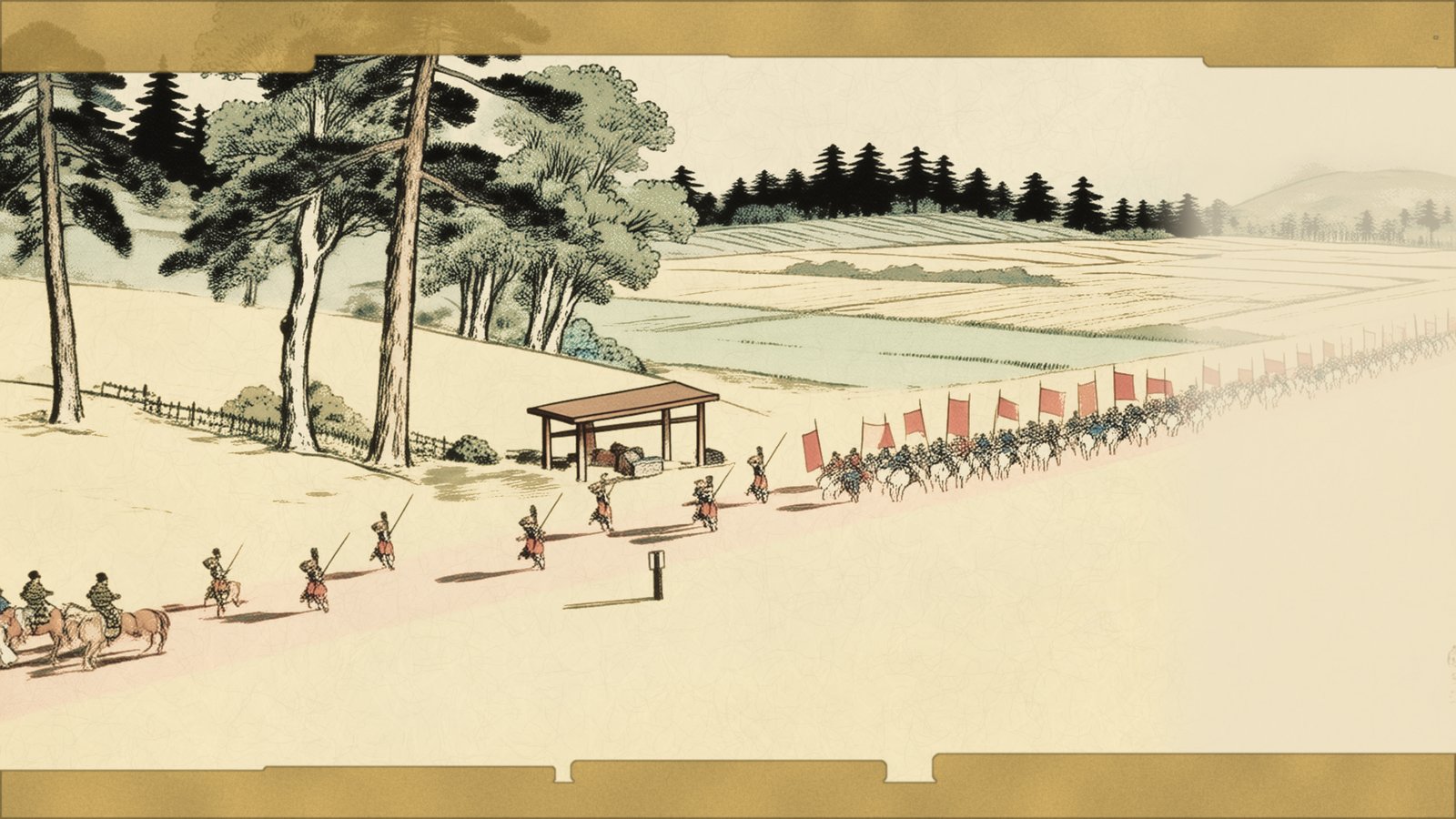
The Shinchō Kōki says Okabe Gorōbyōe at Narumi surrendered and was spared, and that Ōdaka, Kutsukake and others were abandoned at the same time. The story that Narumi was handed over in exchange for Yoshimoto’s head comes from later books.
Motoyasu left Ōdaka in the middle of the night of the 19th and entered Okazaki castle on the 23rd, after the Imagawa garrison had abandoned it (National Archives of Japan). He went on fighting the Oda on the Imagawa side, and made peace with Nobunaga in 1561. One view holds that no contemporary source records Motoyasu meeting Nobunaga at Kiyosu in the first month of 1562.
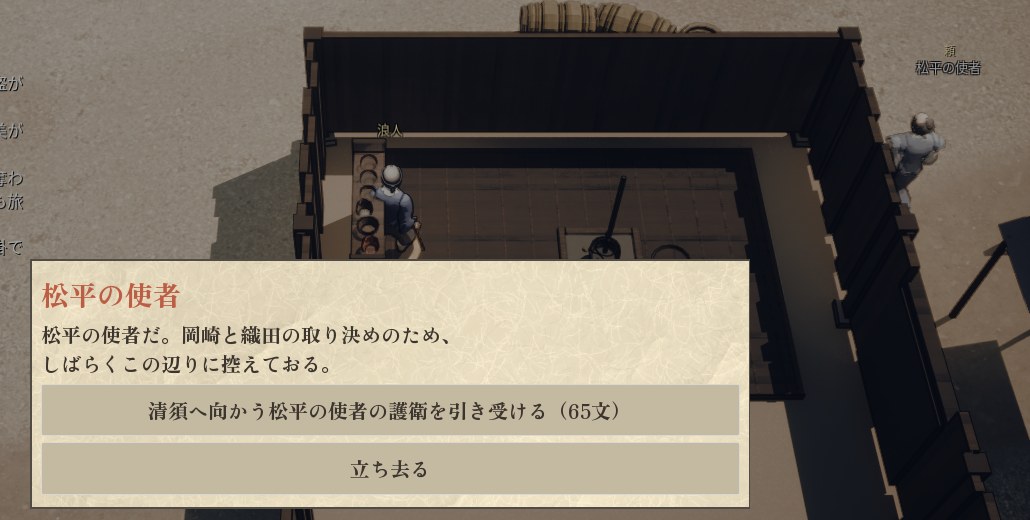
In the game as it stands, the Matsudaira do not break away from the Imagawa all at once, but in several steps. We first built it as an immediate break, and changed it after someone outside the team looked at it. The dates of the peace and the alliance are currently placeholders inside the game, not claims about history.
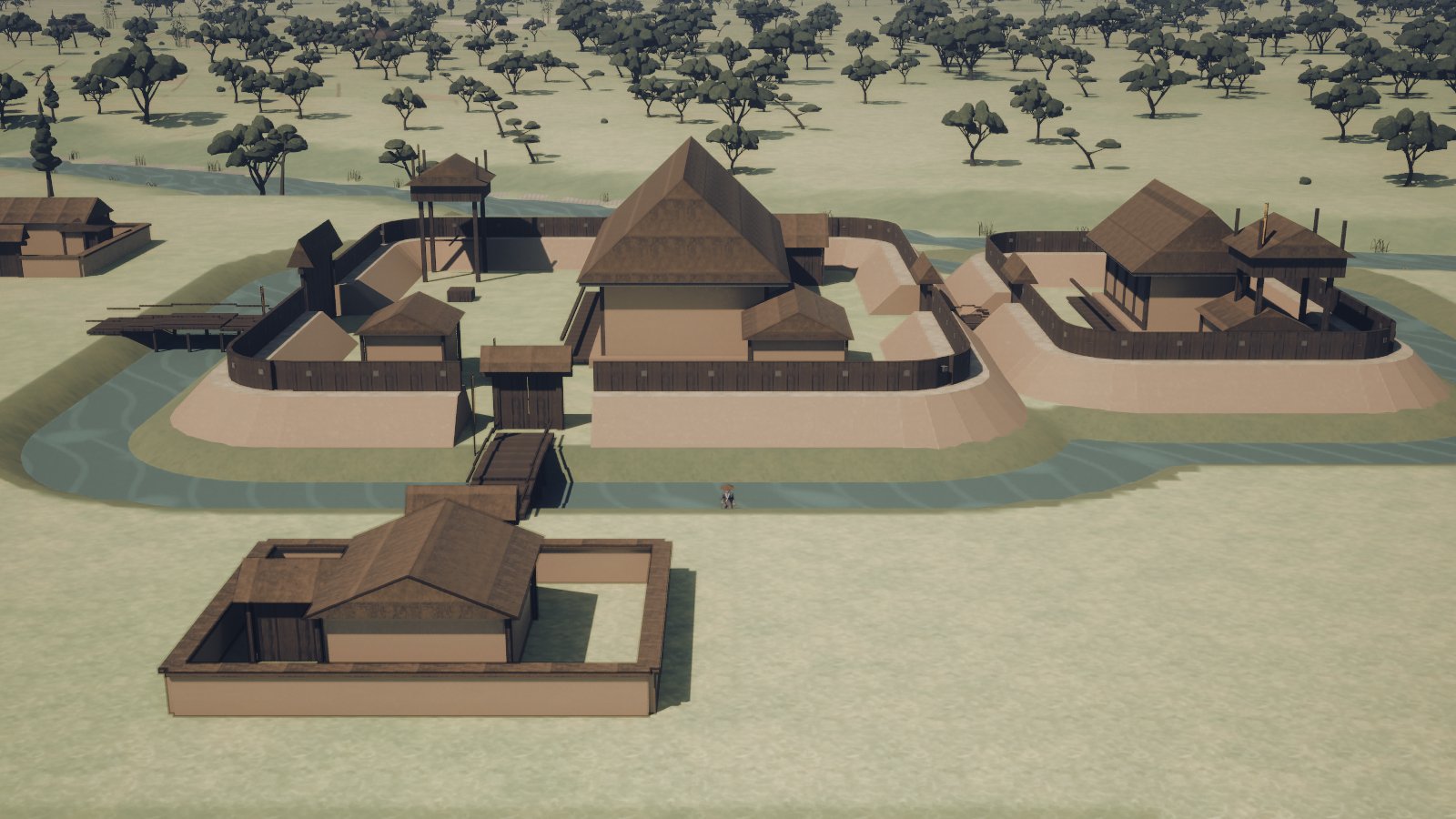
We recently built Nobunaga’s Kiyosu castle too. It has no keep or stone walls from later periods, just moats, earthen ramparts and board fences.
6. What we are changing on purpose
- The hero, the villagers, the houses you can serve, and some post towns and checkpoints are fictional. You never serve a real local house.
- The map is a quarter of the real size.
- Some dates are placeholders that exist only in the game.
7. If the Imagawa win
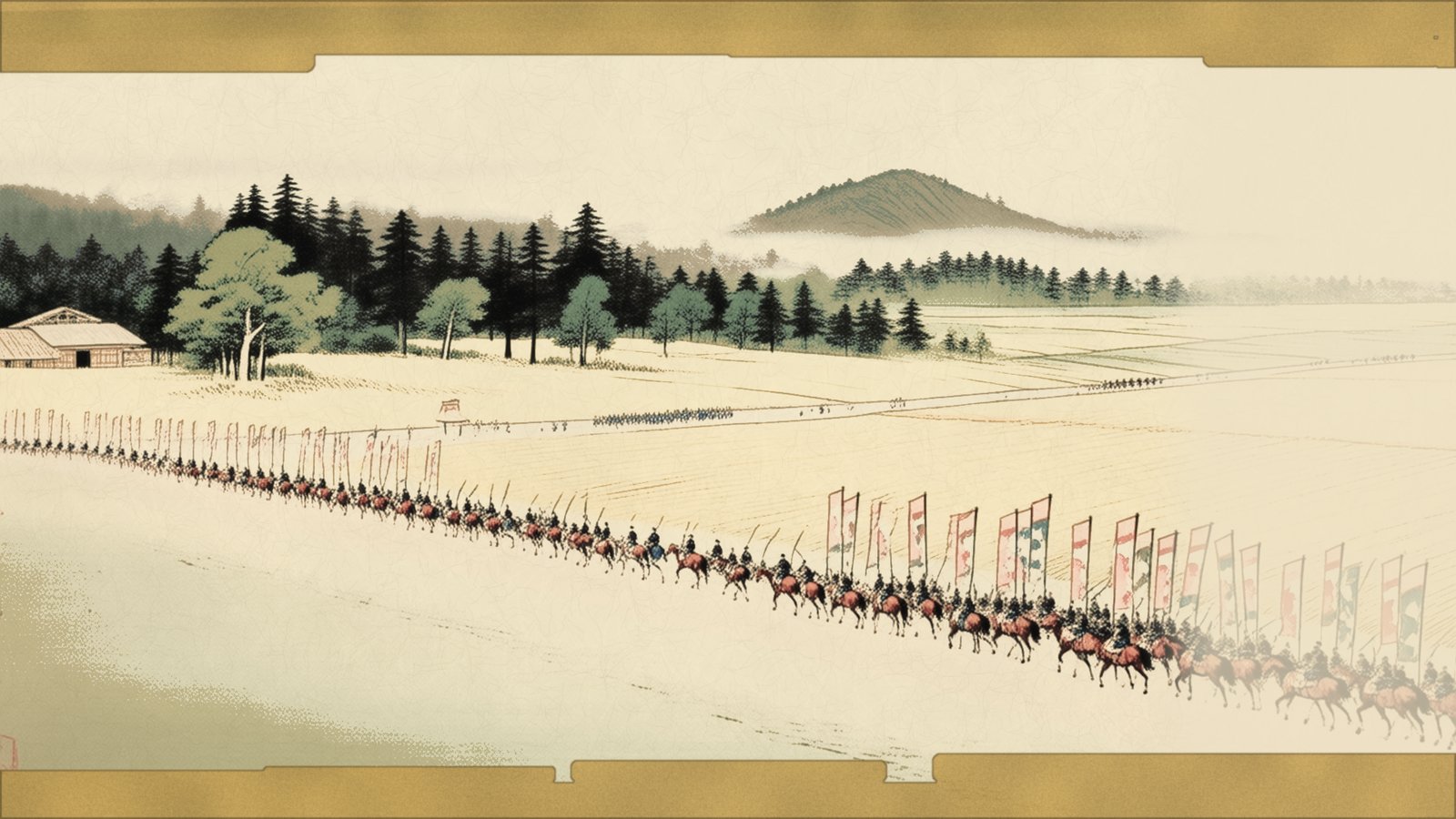
We thought about a route where the Imagawa win. The game already lets Okehazama end differently from history, depending on what the hero does.
What we are undecided on is whether to build the years after that, from 1561 on. We are leaning toward not building them, for three reasons:
- The point of this game is walking on top of history we have researched. There are no sources for a 1561 in which Yoshimoto is alive. Everything after that would be invented.
- The events we want to build next (the Matsudaira–Oda peace, the Kiyosu alliance, Mino, the march on Kyoto) all sit on a world where Yoshimoto died. Making an Imagawa-victory world just as rich means building the content twice.
- At a ronin’s eye level, life may not change much when the winning side changes.
Looking at history, the Shinchō Kōki says the Yamaguchi of Narumi, who sided with the Imagawa, were later summoned to Suruga and made to commit suicide. And Motoyasu could return to Okazaki only because the Imagawa garrison abandoned it. An Imagawa-victory world might be one where “they won, but neither the local lords nor the Matsudaira are very happy about it” (this part is my own reading).
Our current thinking is to keep the possibility of an Imagawa win, and not build the years after it. But this is also a matter of taste. Would you want to walk Owari after an Imagawa victory? Let us know.
Sources
We list only what we actually read. The scholars’ views were checked only as far as their names appear in the notes of the pages below; we have not read the books themselves.
- Shinchō Kōki, opening volume (Wikisource text; based on the Hokiyama Kageo edition, 1881): https://ja.wikisource.org/wiki/信長公記 . The opening volume dates this battle to Tenbun 21, so we did not take the year from it.
- National Archives of Japan, “The Battle of Okehazama | Tokugawa Ieyasu”: https://www.archives.go.jp/exhibition/digital/ieyasu/contents1_03/
- Japanese Wikipedia, “Battle of Okehazama”, “Kai–Sagami–Suruga Alliance”, “Kiyosu Alliance”, “Imagawa Ujizane”, and the views cited in their notes: Owada Tetsuo, Imagawa Yoshimoto (Minerva Shobō, 2004); Fujimoto Masayuki, Okehazama: Nobunaga’s “Surprise Attack Myth” Was a Lie (Yōsensha, 2008); Ōishi Yasushi (ed.), Imagawa Yoshimoto (Ebisu Kōshō, 2019); Kuroda Motoki, Zuikei-in, Wife of Hōjō Ujiyasu (Heibonsha, 2017); Marushima Kazuhiro, “Matsudaira Motoyasu’s Return to Okazaki Castle” (Sengokushi Kenkyū 76, 2016)
Every picture in this post is a scroll or a screenshot from the game in development. The scroll art is made with an image-generation AI.